
A rural property in the Shepparton region contained a confirmed clandestine MDMA laboratory operating within the main living unit, with associated activities also extending into the shed and attached spaces.
Independent testing identified significant MDMA contamination across the property, including contamination throughout the living areas. Results ranged from 0.92 to 490 µg/100 cm², with the highest result recorded in the main living area.
The main concern was the contamination within the domiciled areas of the property. Under the Australian clandestine drug laboratory remediation guidance, domiciled and non-domiciled areas are assessed against different investigation levels, meaning contamination within the living areas required particular attention as part of the remediation strategy.
Contam Solutions was engaged to carry out the remediation using a staged approach designed to avoid unnecessary large-scale demolition. The strategy was to reduce contamination first, progressively test the affected areas and only move to targeted demolition where cleaning alone could not achieve the required outcome.
Contam Solutions first reviewed the independent assessment and engaged an independent occupational hygienist to prepare the Remediation Action Plan (RAP), then prepared the Safe Work Method Statement (SWMS), Job Safety Analysis (JSA) and site controls required to safely undertake the work.
The remediation began with site clearance and make-safe works. Specialist trades completed the electrical isolation and the degassing and removal of air-conditioning equipment, while Contam removed contaminated contents where required. Contam also removed the chemical residues and waste associated with the clandestine operation before detailed surface remediation commenced.
Affected surfaces were HEPA vacuumed and treated using a staged chemical remediation process, with progressive testing used to assess whether further cleaning or targeted demolition of building materials was required.
Where contamination remained above the applicable investigation level after cleaning, targeted demolition of affected flooring, subfloor materials or other building elements was undertaken rather than moving immediately to full demolition.
| Property | Rural residential property with main living unit, shed and attached spaces |
| Contamination type | MDMA contamination associated with a confirmed clandestine laboratory |
| Primary concern | Widespread contamination through the domiciled living areas |
| Australian Government guideline level – residential | 7 µg/100 cm² |
| Australian Government guideline level – commercial/industrial | 130 µg/100 cm² |
| Highest MDMA result | 490 µg/100 cm² (main living area) |
| Compared with residential guideline level | 70 times higher |
| Council involvement | Property subject to an Improvement Notice |
| Remediation strategy | Staged remediation with progressive testing |
| Targeted demolition | Used where contamination could not be reduced sufficiently by cleaning alone |
| Independent validation | Carried out separately by an independent provider after remediation |
For context, the Australian Government Clandestine Drug Laboratory Remediation Guidelines set surface investigation levels for MDMA of 7 µg/100 cm² in residential areas and 130 µg/100 cm² in commercial/industrial areas.
Review the independent assessment and contamination results.
Engage an independent occupational hygienist to prepare the Remediation Action Plan (RAP).
Prepare the Safe Work Method Statement (SWMS), Job Safety Analysis (JSA) and site safety documentation.
Complete electrical isolation and make-safe works using specialist trades.
Specialist trades degas and remove affected air-conditioning equipment.
Clear the site and remove rubbish, loose contents and contaminated materials.
Remove chemical residues and waste associated with the clandestine operation.
HEPA vacuum and prepare the affected internal surfaces.
Complete the initial remediation wash cycle.
Complete Contam’s own progressive testing of floors, subfloors, walls and internal structures.
Complete targeted demolition of flooring or building materials where contamination remained above the applicable investigation level.
Complete further remediation of affected areas.
Complete Contam’s final testing to confirm the property is ready for independent validation.
Confirm which building materials could be retained and which required demolition.
Hand the property over for independent post-remediation validation.
Provide a completion report, together with the independent validation results, to the client for submission to Council.
Contam structured the works around staged remediation and progressive testing so demolition decisions could be based on actual results rather than assumptions. This approach meant the kitchen and all internal walls were successfully remediated and retained, along with approximately three-quarters of the flooring.
The bathroom and en suite were stripped out completely. In the main lab area, demolition was partial: the walls were remediated and only the flooring was removed.
Progressive testing continued through the works and final testing was completed before the property went to independent validation, avoiding repeated validation rounds and the cost that comes with them.
Contam had to plan the works around the lack of basic site services. Approximately 300 litres of water was transported to the property on three separate occasions to complete the remediation and rinse stages, and generators supplied power for the works.
Because the Australian Government guidelines apply different MDMA investigation levels to residential and commercial/industrial areas, the remediation strategy had to account for how each part of the property was used.
The staged remediation strategy successfully avoided full demolition of the property, saving the client the cost of a full demolition and rebuild.
The kitchen and all internal walls were retained, along with approximately three-quarters of the flooring. Demolition was limited to the bathroom and en suite, which were stripped out, and the flooring removed in the main lab area.
The property achieved independent clearance following remediation. The completion report and validation results were provided to the client for submission to Council, and the Improvement Notice was removed.
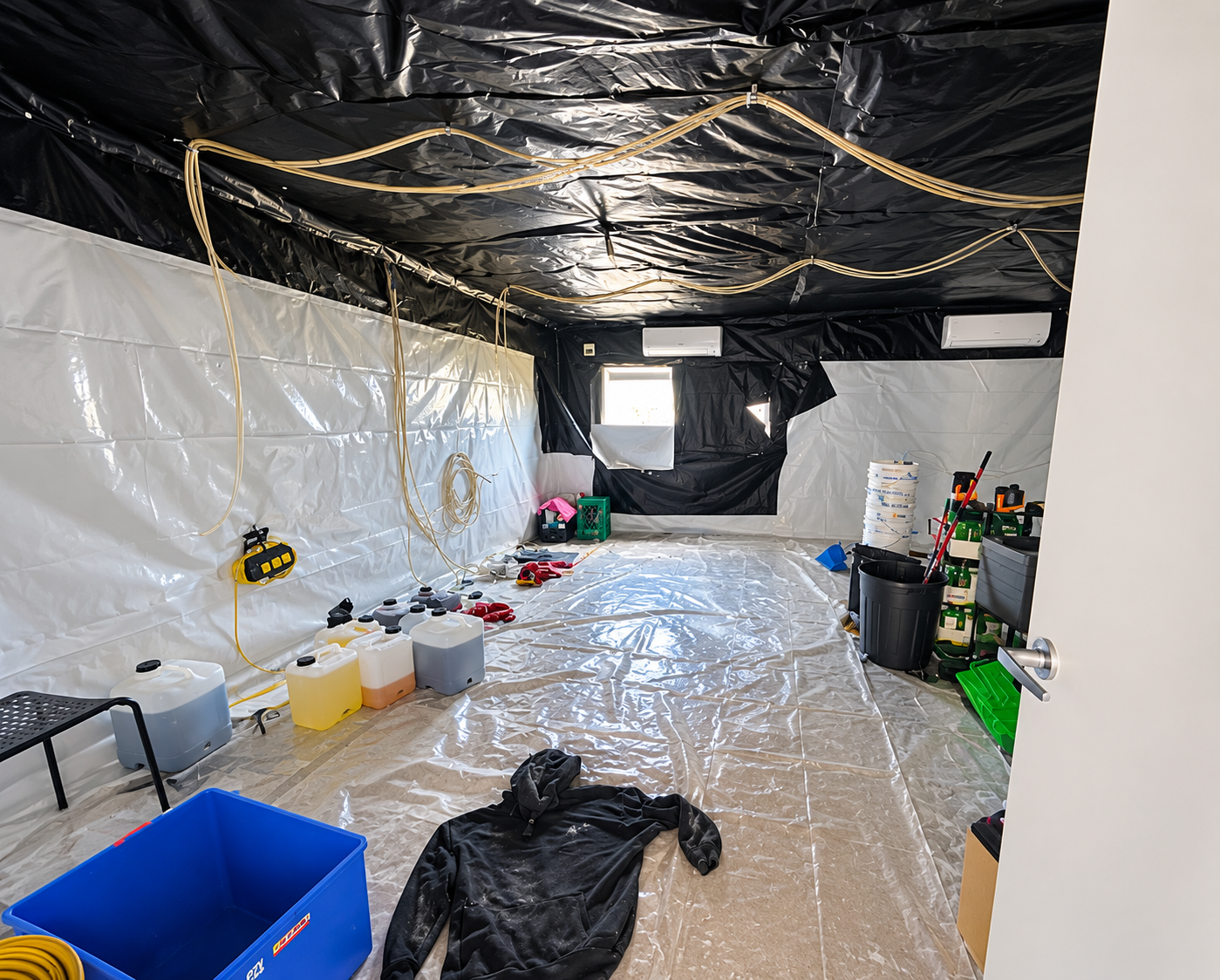
The condition of the main living area before remediation
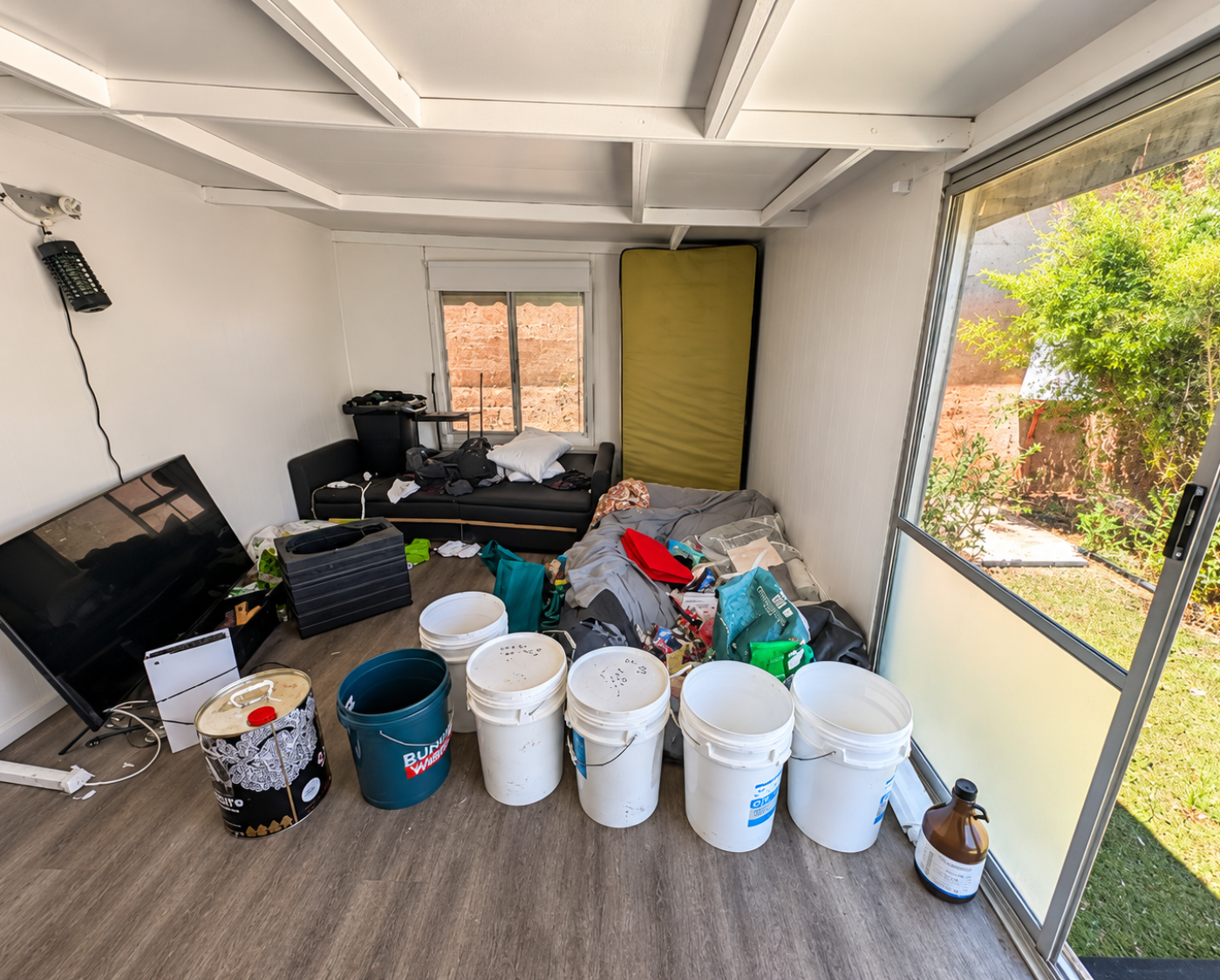
The staged works, cleaning, targeted removal
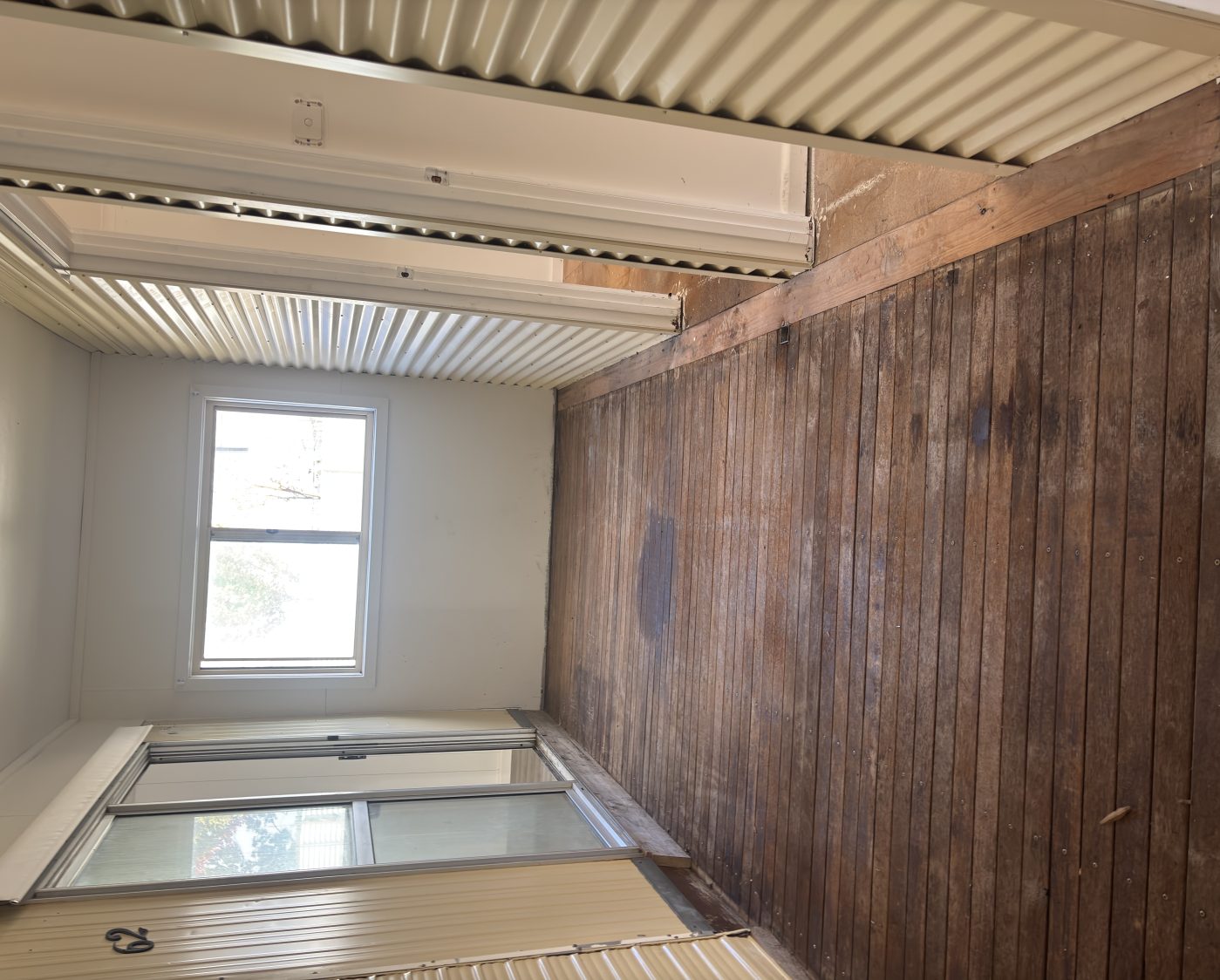
Successfully retained and remediated after the works.
Explore our methamphetamine decontamination services.
Learn more about our meth cleaning and testing services in Melbourne and Victoria.
Understand the independent meth testing process.
Speak with our team about your property remediation requirements and the next steps.

Contam Solutions Pty Ltd
Based in Melbourne, Victoria — Servicing Australia-Wide
Service‑Area Business (no public walk‑ins)
© 2026 Contam Solutions. All Rights Reserved.